Sep 2, 2026
How to Measure and Inspect Friction Plates Before You Order Replacements
A practical wear-limit guide for maintenance and procurement: measure friction plate thickness, groove depth, and rivet clearance, check for glazing, and cross-reference the OE number before ordering
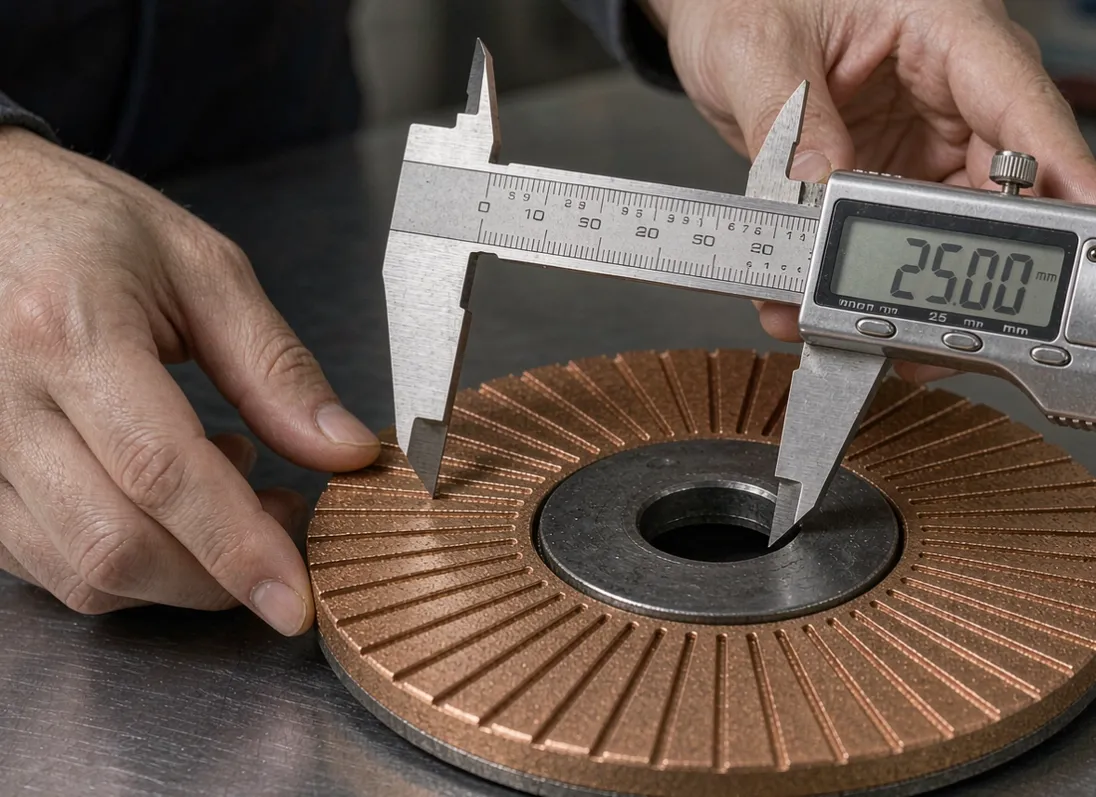
Ordering the wrong friction plate is expensive in two ways: the cost of the incorrect part and the downtime while it is returned and the correct one is sourced. Most wrong orders start with a guess at the dimensions or material rather than a measured inspection of the worn plate. For maintenance teams servicing tractors, forklifts, excavators, and harvesters, a ten-minute inspection with calipers and a careful reading of the wear pattern answers the only questions that matter: is this plate still within its wear limit, and what exactly needs to be replaced. This guide covers the measurements and surface checks that decide whether a plate goes back into the pack or into the scrap bin, and how to record the data so the replacement is ordered correctly the first time.
Tools You Need Before You Start
The inspection requires a vernier or digital caliper with at least 0.01 mm resolution, a straightedge or surface plate to check flatness, and a clean solvent to remove oil and grime from the friction surface. A small magnet helps distinguish a steel-core separator plate from a friction plate if the two have been mixed in a loose pack. A reference drawing or the original specification sheet, if available, turns the inspection from an estimate into a verification. Most importantly, work in a clean space with good lighting, because the early signs of wear, glazing, and micro-cracking are easy to miss on a dirty, oil-slicked plate.
Measure Overall Thickness Against the Wear Limit
Total plate thickness is the first and most decisive measurement. Measure at three or four points around the friction surface, ninety degrees apart, and compare the average to the original specification. Every friction plate has a minimum thickness given in the service manual or marked on the core; once the lining wears to that limit, engagement clamp force drops and the clutch begins to slip. A forklift wet clutch friction plate that has lost even 0.3 mm of material can change pack clearance enough to cause drag or incomplete release. Record the thinnest reading, not the average, because the thinnest point governs the wear limit. If you do not have the original spec, measure a known-good sister plate from the same pack as the reference.
Check Groove Depth and Pattern Wear
Grooves on a wet friction plate are not decorative; they carry oil to the friction interface, cool the surface, and purge wear debris. As the plate wears, the grooves shallow and eventually disappear at the high-wear zones, which traps oil and raises surface temperature. Inspect the groove pattern with a fingernail or a depth gauge: if the grooves are barely perceptible across more than half the plate, the oil-carrying capacity is compromised regardless of the remaining thickness. A copper-based tractor clutch friction plate that has lost its grooves will glaze faster under load even when it measures above the minimum thickness. Note the groove style, radial, cross, or waffle, because the replacement must match the original pattern for correct oil flow.
Inspect the Friction Surface for Glazing and Scorching
Glazing appears as a smooth, glassy film where the plate should have a matte, slightly textured surface. It forms when the plate slips at high temperature and melts the binder resin into a low-friction skin, and it is one of the most common reasons a clutch slips or shudders on engagement. Scorching shows as blue or brown discoloration on the steel core and carbonized friction material, a sign the plate has run beyond its thermal limit. Neither glazing nor scorching is restored by cleaning; a glazed or scorched plate must be replaced, and the cause, usually contaminated or low oil, must be addressed or the new plate fails the same way. For a full rundown of how glazing and overheating develop, see our failure modes guide.
Rivet Recess and Bond-Line Depth: The Real Replacement Trigger
On riveted friction plates, the critical limit is not total thickness but the depth of the friction material above the rivet heads. When the lining wears down to the rivets, the rivets contact the separator plate and score it, destroying the flat reaction surface the friction plate depends on. The rule is simple: replace the plate before the lining reaches the rivets, not after. On bonded or sintered plates, the equivalent check is the bond line between the friction material and the steel core; any sign of the lining separating from the core means the plate is finished. Measure the material thickness above the rivets or bond line directly, because total thickness alone can mask a plate that is about to shed its lining.
Do Not Ignore the Steel Separator Plates
A clutch pack is a system, and the friction plates run against steel separator plates that must stay flat and full-thickness. A warped or scored separator distributes clamp force unevenly, which produces the tapered, one-sided wear that destroys new friction plates within a short interval. Check each separator for flatness against a surface plate, measure its thickness against the minimum, and look for heat checking or scoring on the faces. Replacing only the friction discs against worn separators repeats the original failure; the standard practice is to replace friction and separator plates as a matched set. A custom steel separator can restore original geometry when an exact replacement is discontinued.
Record the Data and Cross-Reference the OE Number
Before ordering, write down the measurements, the groove pattern, the material family, and any part number stamped on the core. The OE reference number, read exactly as stamped including prefixes and suffixes, lets a supplier confirm the material and dimensions from their cross-reference database instead of a guess. When the number is illegible, the machine make, model, year, and the recorded dimensions become the identification path. Matching the replacement to the original material family matters as much as the dimensions: a copper-based plate runs cooler in agricultural applications, iron-based resists wear in forklift duty, and paper-based cushions engagement in industrial transmissions. Our material comparison guide explains how the three families behave under load, heat, and oil.
When the Measurement Says Replace, Source With Confidence
Once inspection confirms a plate is at or beyond its wear limit, order against the recorded data rather than memory. Cross-reference the OE number where possible, verify the spline profile and tooth count, and confirm the material family matches the duty cycle. If the original part is discontinued or non-standard, custom production from a sample or drawing restores the pack to specification. Avoid the common mistake of replacing a single disc and leaving worn separators in place, because that guarantees a repeat failure. For help identifying the right plate from a part number or sample, our OE sourcing guide walks through the cross-reference process step by step, and our selection guide explains how to choose the correct replacement with confidence.
Conclusion
Measuring and inspecting a worn friction plate takes minutes but prevents the costly cycle of wrong orders and repeat failures. Check total thickness against the wear limit, confirm the grooves still carry oil, look for glazing and scorching on the surface, and measure the material above the rivets or bond line, not just the overall thickness. Always inspect the steel separator plates alongside the friction discs, because they determine whether a new plate wears evenly or fails early. Record the dimensions, groove pattern, and material family, then cross-reference the OE number before ordering, and our FAQ section covers replacement intervals and material selection in more detail. As a friction plate manufacturer and supplier, we support buyers with dimensional verification, material matching, and OE cross-reference for agricultural, forklift, and construction applications, and we can produce custom plates when an exact match is no longer available.