Sep 13, 2026
Friction Plate Lifespan and Replacement Intervals: When to Change Plates Before They Fail
A practical guide to friction plate service life: wear limits, replacement intervals, and how to schedule plate changes in tractors, forklifts, and industrial transmissions before failure forces a shu
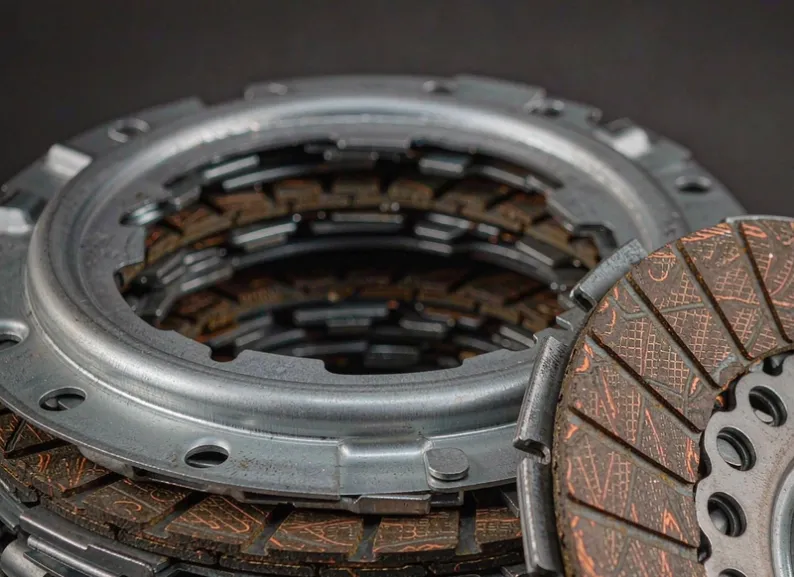
Friction plates do not fail without warning. They wear at a predictable rate, and the symptoms of end-of-life, slipping, longer engagement, hotter oil, and scorched lining, appear weeks or months before the plate seizes or disintegrates. The cost of waiting is rarely just one plate: a disintegrated lining contaminates the oil, scores the separator plates, and can take a transmission or brake out of service for days. For operators of agricultural machinery, forklifts, construction equipment, and industrial transmissions, the smart play is to replace plates on a schedule built from wear limits and operating hours, not from breakdowns. This guide explains how friction plate life is defined, what drives it, and how to set replacement intervals that keep equipment running.
What Lifespan Means for a Friction Plate
A friction plate's lifespan is not a fixed calendar date. It is the operating time, measured in hours or engagements, until the lining wears to its minimum thickness or its grooves wear flat. Manufacturers rate plates against a duty cycle, torque, speed, oil temperature, and engagement frequency, and the rated life assumes clean oil and correct installation. Two identical plates in two different machines can last very different times. The practical definition of lifespan is the point at which the plate can no longer transmit torque without slipping or overheating, which is almost always reached when the lining is worn to its limit, not when the steel core is damaged.
The Two Wear Limits That Trigger Replacement
Every friction plate has two published wear limits, and either one ends the plate's service life. The first is minimum overall thickness: when the lining plus core wears below the stamped or drawn specification, the clutch pack stack height drops and clamping force falls, causing slip. The second is minimum groove depth: as the grooves shallow, oil can no longer flow and cool the interface, so the plate glazes and slips even if it still has thickness. Service manuals list both, and a plate must be replaced when it hits either. Our measurement guide walks through measuring both limits with simple calipers before you decide whether a plate can stay in service.
Operating Hours vs. Engagements: Which Limits Life
For low-cycle machines such as agricultural tractors, life is usually governed by total operating hours and seasonal load. A tractor that idles most of the year but sees heavy PTO load during harvest may wear plates mostly in those weeks. For forklifts, construction loaders, and powershift transmissions, life is governed more by engagement count: thousands of stop-start cycles per shift generate far more friction-surface heating than steady running. This is why a forklift clutch pack often needs plates sooner than a tractor of the same age. Our forklift and construction clutch-pack maintenance guide explains the duty cycles that drive wear in those applications.
Oil Quality Is Half the Lifespan Equation
No friction plate lasts to its rated life in dirty or overheated oil. Contaminants embed in the lining and act as abrasive grit; broken-down oil loses its film strength and lets metal-to-metal contact scorch the surface; wrong viscosity changes the cooling and engagement behavior. The single most effective lifespan extension is a disciplined oil program: correct grade, regular sampling, and filter changes on schedule. When a pack is opened for inspection, the oil should be changed or filtered regardless of how the plates look, because fresh grooves will clog quickly in contaminated oil. Several failure modes we document, including glazing and overheating, trace directly back to oil condition rather than the plate itself.
Reading the Early Symptoms
Plates announce their decline long before they fail. The early signs are subtle: engagement takes a fraction longer, the machine creeps slightly under load, oil temperature runs a few degrees higher, and the lining surface loses its matte texture and starts to look polished or blotchy. Mid-stage symptoms include shudder on takeoff, a burnt smell from the breather, and visible glazing or heat-tint on the lining. By the time the plate chips, cracks, or delaminates, it has already been shedding debris into the oil for some time. Catching the early signs lets you schedule a change during planned downtime instead of during a breakdown. Our failure modes guide maps each symptom to its cause so you can act before collateral damage sets in.
Building a Replacement Interval
A workable interval starts with the OEM rating, adjusted for your actual duty. If the manual says 2,000 hours but your machine runs in high dust, high heat, or continuous stop-start duty, plan for 1,200 to 1,500 hours and verify with inspection. The most reliable method is to inspect at the first interval, measure remaining thickness and groove depth, and back-calculate the wear rate per hundred hours; the next interval then follows the data rather than the book. Keep a simple log per machine of hours, oil changes, and plate measurements so trends are visible. This is the same logic used in our material selection guide: match the plate to the duty, then track how the duty actually treats it.
Replace the Pack, Not a Single Plate
A common and costly mistake is replacing only the most worn plate and leaving the rest. Friction plates in a pack wear as a matched set with the steel separator plates, and the separators pick up heat tint, scoring, and slight warp that are invisible until they cause slip. Mixing a new plate with scored separators forces the new plate to do extra work and shortens its life. Best practice is to replace the full friction-and-separator set as a pack, or at minimum to replace all friction plates together and inspect every separator for flatness and surface condition. Our clutch steel separator plate product page covers the flatness and finish tolerances that matter when deciding whether a separator can stay.
Material Choice Changes the Interval
The lining material sets the baseline wear rate and heat tolerance, so the material you specify directly affects how often you change plates. Copper-based sintered plates carry high torque and shed heat well, suiting agricultural and industrial packs with heavy, intermittent loads. Paper-based plates engage smoothly and quietly in clean, well-filtered wet systems, common in industrial transmissions. Iron-based sintered plates resist wear in harsh, abrasive duty such as construction equipment. Choosing the wrong family, for example a paper plate in a dusty, high-heat application, can halve the interval. Our material comparison guide lays out where each family performs best, and our wet versus dry guide explains when a dry plate is even appropriate.
Sourcing Replacements Without Losing the Interval
A planned change only works if the plates are on hand when you need them. For common applications, stocking the standard plate avoids a weeks-long wait that turns planned downtime into unplanned. For obsolete or custom packs, the lead time can be long, so the interval should trigger an order well before the plate reaches its limit. A manufacturer can cut custom plates from a sample or drawing, but that requires agreeing on material, groove pattern, and dimensions up front, and the minimum order and lead time must be factored into your schedule. Our custom sourcing guide covers the quantities, drawings, and lead times needed to get custom plates before the old ones fail.
Conclusion
Friction plate lifespan is predictable, and that predictability is the operator's advantage. Define life by the two wear limits, minimum thickness and minimum groove depth, not by calendar age. Drive the interval from your real duty cycle and oil condition, verify it with inspection and measurement, and replace the full pack rather than a single plate. Choose the lining material that matches the application, and order replacements before you reach the limit so downtime is planned, not forced. For the practical steps behind each of these, our measurement guide shows what to check, our failure modes guide explains what to watch for, and as a friction plate manufacturer we support buyers with dimensional verification, material selection, and custom plates for agricultural, forklift, and industrial transmissions.