Sep 13, 2026
Choosing the Right Transmission Oil for Wet Friction Plates
A buyer's guide to selecting transmission oil for wet friction plates and clutch packs: how viscosity and friction modifiers affect the plate, what oil suits agricultural, forklift, and industrial dut
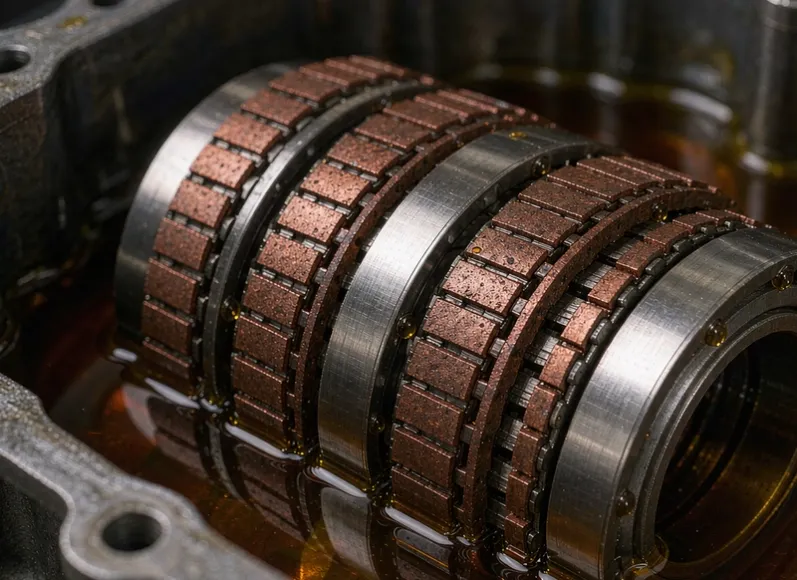
A wet friction plate does not work alone. It works inside a bath of transmission oil that cools the interface, carries away wear particles, and sets the friction coefficient at engagement. Two plates that are identical in material, dimensions, and groove pattern can behave completely differently in the same machine if the oil is wrong, dirty, or overheated. For buyers specifying replacements for tractors, forklifts, harvesters, and construction transmissions, the oil specification is part of the fitment, not an afterthought. This guide explains what the oil does to a wet plate, how viscosity and additives change the result, how to pick an oil by application, and the maintenance habits that decide whether a plate reaches its rated life.
Why Oil Matters as Much as the Plate
In a dry clutch the air around the plate is the medium. In a wet clutch or brake the oil is the medium, and it performs three jobs at once. First, it cools: every engagement converts shear energy into heat, and the oil moves that heat to the housing and cooler. Second, it lubricates the microscopic contact between the lining and the steel separator so the interface does not weld or scuff. Third, it suspends wear debris and air so the plate can engage smoothly instead of grabbing. When the oil fails any of these three jobs, the plate shows it: glazing, hot spotting, uneven wear, or premature slip. Our failure modes guide describes how these symptoms develop, and most of them trace back to oil before they trace back to the plate itself.
Viscosity and the Friction Coefficient
Viscosity is the first number to get right. Too thin, and the oil film collapses under clamp load, letting the lining scuff the separator and raising the chance of grab. Too thick, and the oil clings to the plate, slows drag-down, and raises churning losses that heat the pack. The original equipment drawing names a viscosity grade for a reason: it was matched to the plate material, the spring load, and the engagement speed. A copper-based sintered plate in an agricultural clutch typically runs in a lighter grade than an iron-based plate in a forklift brake that sees hard, frequent stops. When you cross-reference a plate by part number, confirm the OE oil grade as carefully as you confirm the dimensions, because the coefficient of friction the plate was graded against assumes that oil.
Friction Modifiers: What They Do to the Plate
Transmission oil is not just base stock. It carries additive packages, and the friction modifiers in those packages are the part most likely to change how a plate feels. Some modifiers raise the static-to-kinetic friction ratio so the pack locks up cleanly; others lower it for smoother shift feel. A plate developed and tested against one modifier chemistry can shudder, slip, or wear faster against another, even at the same viscosity. This is why many plate and transmission builders publish an approved-fluid list rather than a generic grade. If you change oil brand, check that the friction modifier chemistry is compatible with the lining family, especially for paper-based plates, which are more sensitive to additive type than sintered plates. Our material comparison guide explains where each family sits on that sensitivity scale.
Matching Oil to the Application
Duty cycle decides the oil more than the machine badge does. Agricultural tractor clutches run at moderate load with long idle periods, so they tolerate a standard tractor transmission fluid and benefit from good water separation, because condensation is a real concern in seasonal equipment. Forklift wet brakes and powershift construction transmissions stop and start constantly, so they need an oil with stable friction under repeated heat cycling and strong anti-wear protection. Industrial transmissions and machine tools value smooth, repeatable engagement, so they often specify a controlled-friction fluid that keeps shift quality consistent over thousands of cycles. The plate pattern interacts with this: a cross-groove forklift plate needs oil that stays stable under stop-start heat, while a waffle-groove industrial plate needs oil that supports cushioned take-up. Our wet clutch pack maintenance guide covers the pack-side habits that keep oil doing its job.
Cleanliness and Filtration
The single biggest preventable cause of early plate failure is dirty oil. A new plate installed into a pack with contaminated oil will clog its grooves within hours, because the grooves are exactly the channels that trap debris. Abrasive particles score the lining and the separator, raising friction and heat until the plate glazes. Before a new plate goes in, the oil should be changed or at least filtered, and the pump and cooler checked for flow restriction that caused the original failure. Use the filter rating the transmission calls for; a filter that is too coarse lets grit through, and one that is too fine can starve the pack at cold start. Our measurement guide shows how to read a worn plate for the scoring and glazing that dirty oil leaves behind.
Temperature and Cooling
Oil temperature is the budget the whole pack lives inside. Every lining family has a maximum continuous operating temperature, and once oil exceeds it, the modifier package breaks down and the lining hardens or cracks. The cooler, the pump, and the oil volume set that ceiling, not the plate alone. In continuous-duty construction or marine applications, an undersized cooler is the hidden cause of repeat failures, and no change of plate material will fix it. Watch the oil temperature in service, keep the cooler clean, and treat a sudden rise in operating temperature as a warning that the oil has broken down or the flow has dropped. Our lifespan and replacement intervals guide ties oil temperature and duty cycle to how long a plate should last.
Change Oil When You Change Plates
The cheapest plate you can buy will still fail early if you reinstall it into old, broken-down oil. When the pack is apart for a plate change, that is the moment to refresh the oil and the filter, because the cost is trivial next to the labor of pulling the pack again. Fresh oil also gives the new plate a clean groove network to work with, so it beds in correctly during the break-in period. Skipping the oil change to save a small amount up front is the most common reason a replacement that should have lasted a season fails in weeks. Our installation and break-in guide explains the run-in steps that depend on clean oil being present from the first engagement.
Reading the Oil Callout on the Drawing
When you receive a specification sheet for a replacement plate, the oil grade belongs on it alongside the dimensions. A complete sheet names the viscosity grade, the approved fluid or modifier chemistry, the filter rating, and the change interval. If a supplier quotes a plate but cannot state the oil it was tested against, you are missing the half of the fitment that lives in the sump. Record the OE oil grade from the machine manual or the original drawing, and confirm the new plate was graded against an equivalent fluid before ordering. This is the same discipline as checking spline profile and groove pattern: the value only means something when it is matched to the machine, not to a generic catalog number. Our spec sheet guide walks through every line a complete quotation should show.
Common Oil Mistakes to Avoid
The mistakes repeat across workshops. The first is topping up with whatever oil is on the shelf, mixing chemistries that were never meant to meet. The second is extending the change interval because the oil still looks clean, ignoring that modifier breakdown is invisible to the eye. The third is assuming a higher viscosity is safer, when it actually raises drag and heat. The fourth is reusing filtered-but-contaminated oil after a failure, which simply seeds the new plate with the debris that killed the old one. None of these is a plate problem, yet all of them show up as plate problems on the bench. Treat the oil as a wear part with its own specification and interval, and most repeat clutch and brake failures stop being repeat failures.
Conclusion
The right transmission oil is not a separate topic from the right friction plate. It is the other half of the same fitment. Match the viscosity to the original drawing, confirm the friction modifier chemistry against the lining family, size the oil to the duty cycle, and keep it clean and cool through filtration and a sound change interval. Do those things and a correctly specified plate will reach its rated life; skip them and even a premium sintered plate will glaze and slip early. When you order a replacement, send the machine make and model, the OE part number, and the oil grade you run, so the plate can be matched to the fluid it will actually sit in. As a friction plate manufacturer we supply copper-based, iron-based, and paper-based plates with the material and groove data needed to confirm compatibility, our FAQ covers common oil and change-interval questions, and our wet clutch pack maintenance guide collects the habits that keep both the oil and the plates working.