Sep 13, 2026
How to Read a Friction Plate Specification Sheet (and What Each Value Means)
A buyer's guide to reading a friction plate specification sheet: outer and inner diameter, spline count and profile, thickness, friction material family, groove pattern, and the tolerances that decide
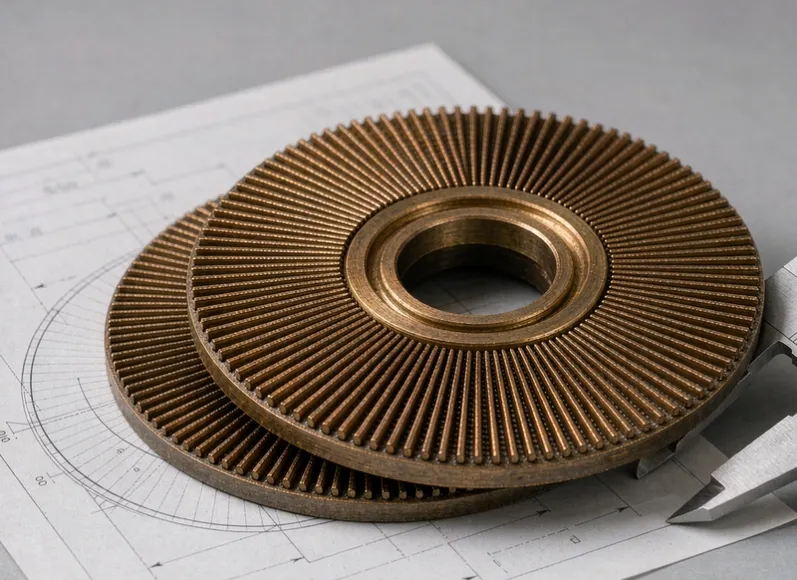
When a supplier sends a quotation, the specification sheet attached to it is the document that decides whether the plate will fit and how long it will last. Two friction plates can carry a similar part number prefix and the same outer diameter yet differ in spline profile, lining thickness, groove pattern, and material family. Any one of those differences is enough to cause a failed fitment or a premature failure in service. Reading the sheet value by value, and knowing which numbers are fixed by the machine and which can be optimized, turns a vague quotation into a part you can order with confidence.
The Five Numbers That Define Fit
Every friction plate specification starts with five measurements: outer diameter, inner diameter, spline tooth count, total thickness, and friction lining thickness. These values are set by the clutch pack geometry and cannot be changed without affecting the pack. Outer diameter determines how the plate sits in the drum, inner diameter defines the bore that rides on the hub, tooth count fixes the spline engagement, and the two thickness values control pack clearance and clamp travel. When a supplier quotes a plate, these five numbers should match the original equipment drawing within the tolerance stated on the sheet. If any one is off, the part is not a replacement, it is a different plate.
Outer and Inner Diameter
Outer diameter is measured across the friction face rather than across the steel core, because the lining can extend past or stop short of the core edge depending on the design. Inner diameter is measured at the spline root, where the teeth meet the hub. Both should be quoted with a tolerance, because a plate held to half a millimeter behaves differently in the pack than one held to a tenth. For a full walkthrough of how to measure these values on a worn plate with calipers, including outer diameter, spline root diameter, and thickness in the order an inspector should record them, see our measurement guide.
Spline Tooth Count and Profile
Tooth count is easy to read and easy to get wrong, because a plate with thirty-six teeth and one with thirty-eight look nearly identical at a glance. Count the full circumference carefully and confirm the profile type: involute, straight-sided, or serrated. Two plates can share a tooth count and diameter yet not interchange if the profile differs, because the teeth seat on the hub at a different angle and either bind or carry force unevenly. The specification sheet should state both the count and the profile. If a supplier lists only the count, ask for the profile before ordering. This is also the value that most often causes trouble when cross-referencing by OE number, which our identification guide covers in detail.
Thickness and the Wear Stock Question
Total thickness is the sum of the steel core and the two friction linings. The sheet should separate them, because the core and the lining wear and clamp differently. A plate quoted at the same total thickness with a thicker core and thinner lining will reach its wear limit sooner, and one with a thinner core may not withstand the same clamp load. When the original specification is uncertain, compare the measured core thickness of the worn plate against the sheet, because the core rarely wears measurably and is therefore a reliable reference. Our guide to friction plate lifespan explains how the remaining lining thickness and groove depth determine when a plate reaches the end of its useful life.
Friction Material Family
The material callout is the line most buyers skim and the one that most affects service life. Copper-based sintered material conducts heat well and suits agricultural clutches with variable duty. Iron-based sintered material resists wear under high surface pressure and suits forklifts and construction equipment. Paper-based material cushions engagement and suits industrial transmissions where shift comfort matters. The sheet should name the family and, ideally, the coefficient of friction range and the maximum operating temperature. A replacement that matches the dimensions but not the material family will run hotter, engage more harshly, or wear out early. Our material comparison guide sets out the three families side by side.
Groove Pattern and Depth
Grooves carry oil, shed heat, and clear wear debris from the friction interface. The specification sheet should describe the pattern, whether radial, cross, or waffle, along with the groove depth and pitch. Groove depth is a wear limit as much as a design value: as the lining wears, the grooves shallow, and once they are gone the plate has reached the end of its useful life regardless of the remaining thickness. When ordering a replacement, match the groove pattern to the original, because a radial plate in a cross-groove pack will not distribute oil correctly. Our guide to friction plate groove patterns explains what each style does and how to read the worn face in your hand.
Tolerances and Flatness
Diameters and thickness are only half of a specification. The tolerance lines tell you how much variation the supplier will allow, and flatness is the value most often left off the sheet. A friction or steel separator plate that is not flat loads unevenly across the pack, which produces tapered wear and glazing even when every other value is correct. Look for a flatness callout and, for sintered plates, a bond-strength or shear-strength figure. A sheet that lists dimensions but no tolerances or flatness is incomplete, and a supplier who cannot quote them is telling you the parts are not inspected to a standard.
Red Flags in a Supplier Specification
Three things signal a specification you should not order against. First, a sheet that lists only outer diameter and thickness, leaving the spline and material to chance. Second, material described in vague terms such as high quality friction material instead of a named family with a friction coefficient range. Third, no tolerance or flatness values, which means the dimensions are nominal only and the plate will be made to whatever the machine happens to produce. A manufacturer that presses and sinters its own plates can supply the full specification, including material family, groove depth, and flatness, and can confirm each value against the original drawing. If a supplier cannot, the risk of a fitment failure shifts entirely to the buyer.
Matching a Quotation to the Machine
The most reliable way to read a specification sheet is to match it against the machine, not against the price. Record the machine make, model, and year, the OE part number if it is still legible, and the five critical measurements taken from the worn plate. Then check that the supplier's sheet agrees on every line before the order is placed. Where the original part has been discontinued, a custom plate can be produced to the measured specification, and our custom sourcing guide covers the minimum order quantity, lead time, and drawing detail that a custom order requires. The goal is simple: a sheet that reads back exactly like the machine's own geometry.
Conclusion
A friction plate specification sheet is a short document, but every line on it decides something, from whether the plate fits to how it engages, how much heat it survives, and how long it lasts. Read the five dimensions against the machine, confirm the spline count and profile, check the material family and groove pattern, and insist on tolerances and flatness. When a value is missing or vague, ask for it before ordering, because a gap in the sheet becomes a failure in the field. As a friction plate manufacturer and supplier, we provide full dimensional and material specifications for copper-based, iron-based, and paper-based plates and steel separators, and we confirm each value against the original before quoting. Our FAQ answers common questions about tolerance, material, and replacement intervals.