Sep 13, 2026
Friction Plate Groove Patterns Explained: Radial, Cross, and Waffle Grooves
A specifier's guide to friction plate groove styles: why grooves exist, how radial, cross, and waffle patterns move oil and debris, and what to match when ordering replacements.
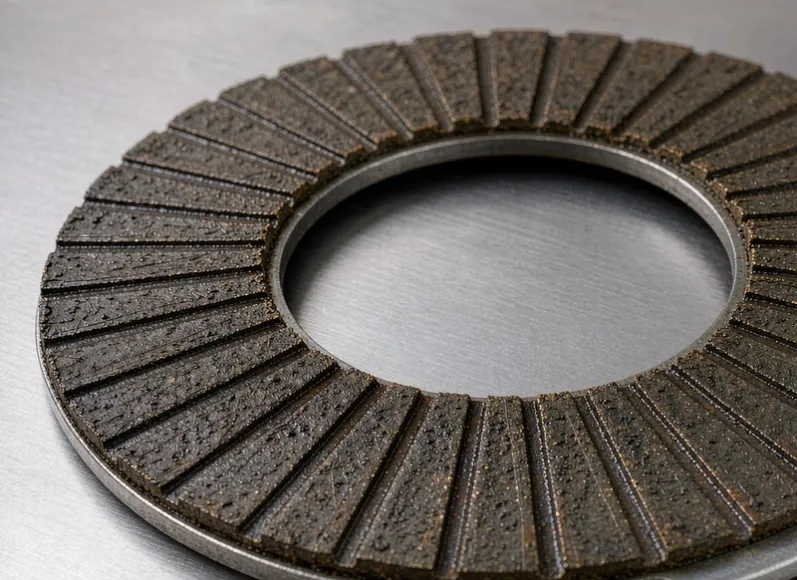
Grooves on a friction plate are not decoration. They are the oil flow channels, cooling paths, and debris exits that let a wet clutch or brake survive repeated engagement without glazing or scorching. A plate with the wrong groove pattern will overheat, slip, or wear unevenly even if the material, thickness, and tooth count are correct. For buyers replacing plates in tractors, forklifts, harvesters, and construction transmissions, matching the groove pattern is as important as matching the part number. This guide explains the three common patterns, radial, cross, and waffle, what each does best, and how to read the worn plate in your hand to order the correct replacement.
Why Friction Plates Need Grooves
In a wet clutch or brake, oil must reach the friction interface, absorb heat, and carry wear particles out of the pack. Without grooves, the oil film becomes trapped between two flat surfaces, leading to hydroplaning at engagement and localized hot spots that glaze the lining. Grooves break the flat interface into segments, letting oil flow in, distribute pressure, and exit with heat and debris. As the plate wears, the grooves shallow; once they are gone, the plate has reached the end of its useful life regardless of remaining thickness. This is why groove depth is one of the first measurements inspectors check when deciding whether a plate can stay in service.
Radial Grooves: Simple Oil Exit Paths
Radial grooves run straight from the inner diameter to the outer diameter like spokes on a wheel. They are the simplest pattern to machine and one of the most common designs on agricultural and industrial friction plates. Because they provide a direct path from the hot center to the cooler outer edge, radial grooves are good at purging hot oil and wear debris quickly. Their weakness is limited oil distribution at the center; under very high heat load, the inner zones can run hotter than the outer zones. A radial-groove copper-based tractor clutch friction plate works well in tractor PTO and transmission packs where duty cycles are moderate and cooling oil is plentiful.
Cross Grooves: Better Oil Distribution
Cross grooves add circumferential channels that connect the radial paths, creating a grid or lattice on the friction surface. This pattern spreads oil across the full face of the plate rather than just pumping it outward, which reduces hot spots and improves engagement consistency under high-torque starts. Forklift wet brakes and powershift construction transmissions often use cross grooves because they face frequent stop-start cycles and need even heat distribution. The trade-off is slightly less aggressive oil purging than pure radial grooves, so the oil quality and level must be maintained. If a cross-groove plate is glazed, the cause is often contaminated or overheated oil rather than the pattern itself.
Waffle or Box Grooves: Maximum Oil Retention
Waffle, box, or spiral-groove patterns divide the surface into small cells that hold oil at the interface during engagement. This design reduces initial grab and cushions the engagement, making it ideal for industrial transmissions, marine drives, and applications where smooth take-up matters more than instant bite. Waffle grooves also help maintain friction coefficient stability as the plate wears, because the cells continue to carry oil even when the land area between them has worn down. The pattern is less common on agricultural or forklift plates where positive engagement is preferred, but it is the standard choice when shock-free engagement protects downstream gears and shafts.
Matching the Groove Pattern When You Order
The fastest way to get the wrong replacement is to specify only the outside diameter, inside diameter, and thickness while ignoring the groove style. A radial plate in a cross-groove pack will not distribute oil correctly; a cross-groove plate in a waffle pack may engage too harshly. When you remove the worn plate, photograph the friction face, count the groove segments, and note whether the pattern is radial, cross, or waffle. The OE drawing usually shows the groove style, pitch, and depth. If you are cross-referencing from a part number, our OE sourcing guide explains how to confirm groove pattern from the supplier's specification sheet, and our identification guide shows what to record when the part number is missing or worn.
Groove Depth and Wear Limits
Grooves are part of the wear specification. A new friction plate may have grooves 0.5 mm to 1.5 mm deep depending on lining thickness and application. As the lining wears, the groove depth decreases, and the oil-carrying capacity drops. Most service manuals give a minimum groove depth alongside minimum plate thickness; either limit triggers replacement. Measuring groove depth is easier than it sounds: a simple depth gauge or the step on a vernier caliper jaw pressed into the groove gives a repeatable reading. For a full inspection checklist that includes groove depth, see our measurement guide, which also covers thickness, glazing, and rivet clearance.
When Custom Groove Patterns Make Sense
Not every replacement has to copy the original exactly. In some cases, the original pattern is the root cause of a recurring failure: a radial pattern in a high-heat duty may benefit from cross grooves, or an aggressive engagement may need waffle cells to reduce shock. A manufacturer can cut custom groove patterns from a sample or drawing, but this requires agreement on the application, oil type, engagement frequency, and torque curve. It also means the plate is no longer a direct drop-in replacement, so the separator plates, clutch spring, and oil cooler must be reviewed as a system. Our custom sourcing guide covers the minimum quantities, lead times, and drawings needed for a custom grooved plate.
Common Mistakes to Avoid
The most common mistake is assuming that any plate of the right size will work. Other errors include installing a dry friction plate in a wet pack, ignoring groove direction when the plate has asymmetric slots, and replacing only the friction discs while leaving scored or warped separator plates in place. A second common error is running a new plate with old, contaminated oil; fresh grooves will clog quickly if the oil carries debris or has broken down from overheating. Always change or filter the oil when the pack is apart, and inspect the pump and cooler for flow restrictions that could have caused the original failure. For a deeper look at how glazing and overheating develop when oil flow fails, see our failure modes guide.
Conclusion
Grooves are a functional part of a friction plate, not a cosmetic detail. Radial grooves purge oil and debris efficiently, cross grooves distribute oil evenly for high-torque stop-start duty, and waffle grooves retain oil for smooth, cushioned engagement. When you order a replacement, match the groove style as carefully as you match the dimensions and material family. Photograph the worn face, measure the remaining groove depth, and check the OE specification or cross-reference database before placing the order. Our material comparison guide explains how the lining material interacts with groove design, our FAQ covers common replacement intervals and oil-change practices, and as a friction plate manufacturer we support buyers with pattern matching, dimensional verification, and custom groove configurations for agricultural, forklift, and industrial applications.