Sep 19, 2026
Friction Plate Stack Height and Clutch Pack Clearance: How to Measure and Set It
A specifier's guide to clutch pack stack height and oil clearance: what the measurement means, how to set it under clamp load, why worn grooves and linings shrink the pack, and when to shim or rebuild
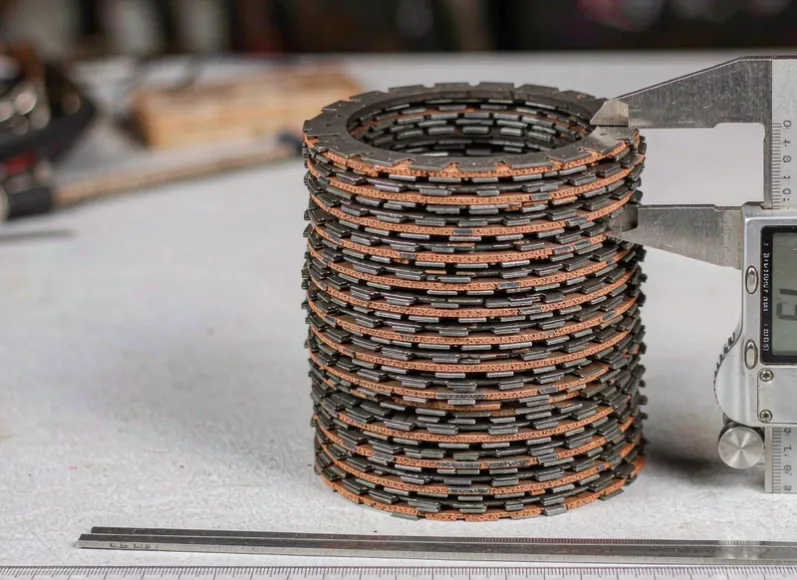
Stack height, sometimes called pack height or clutch pack height, is the total thickness of a fully assembled clutch or brake pack measured from the inside face of one backing plate to the other. It is not the same as a single plate thickness, and it is one of the most overlooked measurements in clutch service. Get it wrong and the pack either binds under clamp load or develops excessive clearance that lets the clutch slip and the steel separators overheat. For buyers specifying replacement friction plates and steel separators, understanding how stack height, oil clearance, and plate wear interact turns a box of measured parts into a pack that engages correctly on the first try.
What Stack Height Actually Measures
Stack height is the compressed dimension of the entire pack: every friction plate, every steel separator, the two backing plates, and any shims or wave springs in the stack. The transmission or brake housing is machined to accept a specific stack height within a tight band. If the assembled pack is too tall, the apply piston cannot fully seat and the clutch never reaches full clamp; if it is too short, the piston over-travels and the pack lives in constant micro-slip. Neither condition shows up in a single plate thickness measurement, which is why stack height is checked as a complete assembly rather than as individual parts.
Oil Clearance vs. Stack Height
Oil clearance, also called running clearance or pack clearance, is the gap that remains between the friction faces when the clutch is released. It is the difference between the free stack height and the compressed height under clamp load, distributed across the friction interfaces. Correct clearance lets oil film the plates so they separate cleanly when disengaged and re-engage without shock. Too little clearance and the plates drag, generating heat and wear; too much and the clutch slips on engagement and the apply time stretches. Clearance is set by the combined thickness of the plates and any shims, so it moves as the linings wear and the grooves shallow.
How to Measure Stack Height
The standard method is to assemble the pack dry on a flat surface, place a known flat plate on top, and compress it to the specified clamp load with a press or a stack-height fixture, then measure with a height gauge or a set of calibrated blocks. For a field check without the fixture, lay the stack on a surface plate, press it flat by hand between two straightedges, and measure the compressed height with a vernier or dial caliper. This gives a usable number as long as every plate in the stack is flat and seated. The procedure mirrors the single-plate checks in our measurement guide, which covers outer diameter, spline root, and thickness in the order an inspector should record them.
Why Worn Grooves and Linings Shrink the Pack
As friction linings wear, the pack height drops. Grooves are part of that wear budget: a new plate carries grooves that add to the oil clearance, and as they shallow the plate loses both material and flow capacity. A pack rebuilt with new friction plates but worn steel separators will read short; the same pack with new plates and new separators returns to the original height. This is why a stack-height check should always be paired with a groove-depth and thickness check, as described in our groove patterns guide and our lifespan guide. Reusing scored or warped separators is the most common cause of a pack that measures correct on paper but still drags in service.
Shimming for Worn or Mixed Plates
When new plates alone bring the stack back into spec, no shim is needed. When the pack comes up short, thin shims placed between the backing plate and the housing restore height without changing the apply piston travel. Shimming is a repair, not a fix: it hides lining loss but does not restore friction material, and it must never be used to compensate for a plate that is the wrong thickness. Mixed batches of plates with different core thicknesses also need a stack-height check, because two parts with the same part number from different suppliers can differ enough to change clearance. Our custom sourcing guide explains how to specify tight thickness tolerances so mixed batches are not a surprise at build time.
Clearance, Heat, and Failure
A pack with too little oil clearance runs hot. The plates never fully separate, so they micro-slip under load, glaze, and transfer material to the steel separators, which then warp. Our failure modes guide documents how glazing and overheating develop when oil flow or clearance fails. Conversely, too much clearance lets the clutch slip on every engagement, which is where most heat is actually generated in a wet clutch. Stack height is therefore a preventive measurement: set it once at build, verify it after a rebuild, and the pack stays inside the window where the cooling oil can do its job and the plates engage without shock.
Stack Height in Wet vs. Dry Packs
Wet clutch and brake packs run in oil and depend on that film for cooling and separation, so clearance is the dominant concern. Dry friction packs have no oil film and are far less tolerant of clearance error; they rely on precise plate flatness and a tight stack. The measurement method is similar but the acceptable band is tighter and the consequences of drag are immediate. Our wet vs dry guide compares the two designs and where each belongs in agricultural, forklift, and industrial service, and it explains why a wet pack can tolerate a small clearance error that a dry pack cannot.
Common Stack-Height Mistakes
The first mistake is measuring a single plate and assuming the pack is correct. The second is reusing old steel separators with new friction plates and wondering why the pack drags. The third is shimming to hide worn linings instead of replacing the plate. The fourth is mixing plates from different suppliers without a stack-height check. And the fifth is ignoring the backing plates: if they are dished or worn, the stack reads wrong no matter how perfect the friction plates are. Each of these is caught by measuring the assembled pack, not the individual part, before the housing is closed.
When to Rebuild Against the Drawing
The reliable way to set stack height is to rebuild against the original equipment drawing, which states the nominal pack height, the clamp load used to measure it, and the allowed tolerance. When the original plate has been discontinued or the machine is a mixed fleet, a manufacturer can supply plates matched to the measured stack, including custom core thickness and groove depth, and confirm the assembled height before shipping. That is the same discipline used in our custom sourcing and material comparison guides: match the geometry, confirm every value, then build, so the replacement behaves like the original in the pack.
Conclusion
Stack height and oil clearance are the measurements that decide whether a clutch or brake pack actually works once it is bolted together. They are not single-plate numbers; they are the sum of every plate, separator, shim, and backing surface in the stack, checked under clamp load. Measure the assembled pack, pair it with groove-depth and thickness checks, shim only to restore geometry, and never reuse warped separators. As a friction plate manufacturer we supply copper-based, iron-based, and paper-based friction plates and steel separators to matched stack heights, and we confirm the assembled pack dimension against the original drawing before release. Our FAQ covers common questions about clearance, tolerances, and rebuild intervals.